
Amazon Kindle Colorsoft Review: 4,096 Colors — Buy or Skip?
Amazon Kindle Colorsoft Review: 4,096 Colors — Buy or Skip?

| Takeaway | Detail |
|---|---|
| The $270 Colorsoft makes color the premium decision. | Its aluminum version adds $30 over plastic, but the available evidence does not show that color will improve every reader’s books, diagrams, or coursework. |
| The $149.99 basic Kindle anchors the value case. | Aluminum costs $189.99, a $40 premium that changes materials without adding the Colorsoft color feature. |
| The 30% speed claim needs context. | Amazon says the basic Kindle is 30% faster but does not define the measured operation, so buyers should not treat it as a settled performance advantage. |
| A $50 Paperwhite premium is not a verdict on color. | CNN found aluminum felt more premium and durable than soft-touch plastic; that material result does not establish value for the Colorsoft display. |
That is the decision-science problem with Amazon’s color-first presentation. The color pitch makes a visible difference easy to notice, even when a reader mainly wants fast, legible monochrome pages. Color is a specialized input, not a superior default. Its value depends on the material a reader expects to read—children’s books, diagrams, textbooks, comics, magazines—not on how many shades appear in a product photograph.
Amazon’s lineup makes the trade-offs concrete. The basic Kindle starts at $149.99, the aluminum version costs $189.99, and the Colorsoft is a $270 model. Aluminum adds $30 to the Colorsoft and $50 to the Paperwhite, while the basic model’s claimed 30% speed increase remains undefined. Shared flush bezels and a top-right power button make the redesign feel consistent, but they do not make color universally relevant. The rational purchase is the model that matches actual reading, not the one whose most vivid feature happens to dominate the page.
Color is an objective capability; benefit is a subjective, use-specific value. Conflating them is the buying error. Amazon lists a 7-inch E Ink Kaleido display for the 2026 Kindle Colorsoft. The display supports black-and-white reading and color imagery. That distinction matters: it tells us what the hardware can do, not how many hours that capability will improve.
7-Inch E Ink Kaleido Display
Amazon’s electrophoretic display moves electrically charged pigment particles inside microcapsules to form an image that persists without continuous power, rather than using a backlit LCD. That mechanism establishes durable, ink-like output, but it does not establish that color improves a particular book. A visible feature can therefore be technically real while contributing little or nothing to an ordinary prose page. Amazon’s specifications identify the hardware’s capability; only the reader’s planned material can establish subjective value.
The exchange appears during refresh. For prose, partial refresh changes only altered pixels. After illustrations, a full-screen refresh pulses more of the panel to clear ghosting. Comics and animation are therefore the stress case: broad areas change, images arrive in sequence, and the display must balance targeted updates against more disruptive clearing. That mechanism supports testing color-heavy formats; it does not turn every illustrated page into eligible color time.
From my Judgment & Decision Science perspective, an attribute-weighting exercise should counter comparison-chart salience bias. Color may dominate Amazon’s chart because it is visually salient, but it deserves substantial decision weight only when planned material depends on it. A decorative cover or ordinary chapter receives little weight; hue that identifies map regions, diagram states, or reference categories can carry information that grayscale removes. Weighting the use case before pricing the feature converts a conspicuous specification into a forecast of benefit.
Apply that audit to the article’s canonical rule: count only genuinely color-dependent hours over the planned reading period, require that total to meet the preregistered minimum, and require conservative incremental value to exceed the actual Colorsoft checkout premium. Choose Colorsoft only when both conditions hold; otherwise choose Paperwhite. Eligible content is comics, maps, diagrams, and color-coded reference material—not ordinary prose. The final diagnostic for each title is: would the same book be materially harder to understand or less satisfying in grayscale?
| Planned material | Amazon-stated mode | Refresh exposure | Decision weight | Audit action |
|---|---|---|---|---|
| Ordinary prose and black-and-white line art | Black-and-white | Partial: altered pixels only | Minimal color weight | Exclude from color-dependent hours |
| Comics, maps, diagrams, and color-coded references when hue carries meaning | Color | Partial updates plus full-screen clearing | Substantial when grayscale loses information | Count only the qualifying portion |
| Animation or other rapid full-color sequences | Color | Repeated broad-area changes and clearing pulses | Diagnostic, not an automatic benefit | Stress-test only; add no automatic hours |
Amazon’s “up to” battery claim is easy to misuse. Any such estimate depends on controlled conditions and is not evidence of typical field runtime. More importantly, a controlled runtime estimate cannot satisfy the article’s next-year threshold: battery capacity and genuinely color-dependent reading are different quantities. Neither estimate creates color value.

Color and Battery Life
A published palette count describes palette depth, not CIE gamut coverage. It therefore does not reveal how much of a source image’s color range the display can reproduce, how accurately its hues are rendered, or whether those differences are visible under ordinary reading conditions. It also is not independent evidence that the Colorsoft reproduces every source image more accurately. A palette count becomes relevant to the buying decision only when a reader can connect it to specific material whose meaning or usability depends on color.
The strongest rebuttal to “more vivid means more understandable” comes from Delgado, Vargas, Ackerman, and Salmeron’s meta-analysis of e-book and print reading studies. According to Delgado and colleagues, e-books and print showed no significant overall difference in comprehension. That result does not prove color can never matter; it blocks an unsupported inferential leap from a display property to a cognitive benefit. In ordinary prose, hue usually supplies little or no task-relevant information. Additional color capacity should therefore receive conservative valuation unless the reader expects substantial material in which color itself carries information.
I would treat Amazon’s phrases “custom Color Filter Array” and “fastest page refresh technology” as unquantified marketing unless they appear with a named independent test, a disclosed refresh-time measurement, and matched images viewed under controlled lighting. A color image can make one display look better while leaving another untested; inconsistent ambient lighting can manufacture the same illusion. Until the comparison is reproducible, neither phrase should increase the conservative value assigned to the Colorsoft. At current U.S. list prices, the actionable discipline is to count only future hours where removing color would impair understanding or judgment—not merely hours spent looking at a more colorful page.
The matrix should return three category winners, not one synthetic winner. I would freeze Amazon.com U.S. list prices on the article’s publication date and hold storage constant at the base configuration used below. According to Gizmodo, Amazon kept launch prices unchanged from the preceding models; price stability is context, not evidence that a higher sticker creates more reading utility.
| Option | Required next-year test | Decision |
| Kindle Colorsoft | At least the preregistered minimum of genuinely color-dependent hours and conservative incremental value above the actual checkout premium | Buy only when both conditions are satisfied. |
| Kindle Paperwhite | Too few qualifying hours under the preregistered minimum or conservative incremental value at or below the actual checkout premium | Buy in every other case; the Colorsoft premium is not justified. |
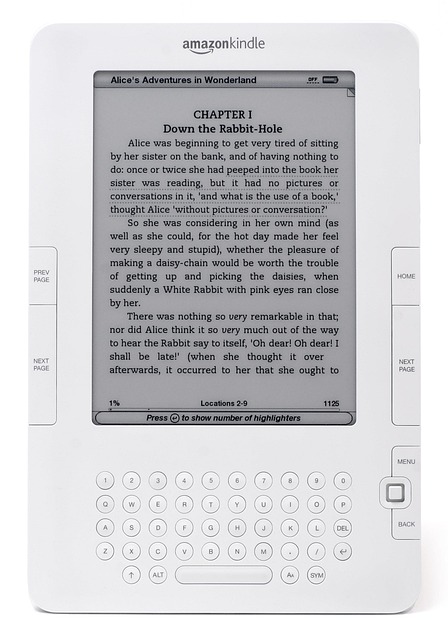
U.S. MSRP Matrix
I would pre-commit to this veto order because an additive star score lets one visible strength masquerade as compensation for a missing requirement.
The color panel should not receive an automatic promotion. According to GameStar, Paperwhite’s monochrome rendering was sharper and higher-contrast than Colorsoft’s for conventional books. That comparative result is why Paperwhite can be the overall prose value winner while Colorsoft remains a specialist.
| Decision sequence | Required test | Action |
|---|---|---|
| First | Is color genuinely required? | No: remove both Colorsoft versions. Yes: retain them for the break-even test. |
| Next | Is handwriting required? | Yes: retain Scribe; retain Colorsoft too only if color annotation is indispensable. No: remove Scribe. |
| Finally | Which models survive? | Compare size, storage, lighting, page-turn hardware, and actual checkout price without averaging away a failed requirement. |
For a surviving Colorsoft, the break-even column converts the actual Colorsoft-minus-alternative checkout price into required value per genuinely color-dependent hour. Both preregistered tests must pass; if either fails, Paperwhite wins. Discounts change the arithmetic, so Amazon’s MSRP cannot supply the final answer.
The Signature Edition stays outside the base-model comparison. According to Amazon’s official Kindle family page, it is a distinct 32GB product with an automatic front light. Those are separate storage and lighting-convenience benefits; they do not establish that color is useful. A buyer needing color but neither addition should compare the base Colorsoft rather than pay the package premium by reflex.
Page-turn controls are a comparison among survivors, not scoring bonuses. According to CNN Underscored, Click Remote compatibility spans the preceding and new Kindle generations, so remote support should not break a tie.
A more colorful Kindle is not automatically a better Kindle: ordinary prose exercises little or none of the capability being priced. The defensible choice is conditional. That caveat does not imply color has no value; it means the relevant uncertainty concerns a particular buyer’s unmet, color-dependent use. I separate evidence that shows association from evidence that can support a purchase decision.
| Amazon-listed 16GB base model | Frozen Amazon.com U.S. MSRP | Display mode | Front light | Page-turn hardware | Annotation | Best-fit user | Principal sacrifice | Annual color break-even |
|---|---|---|---|---|---|---|---|---|
| Basic Kindle | $149.99 | 6-inch monochrome, per Gizmodo | Front-lit | Dedicated buttons | Highlights and notes; no stylus | Budget-capped compact reader; baseline only | No water resistance, per CNN Underscored; lower contrast than Paperwhite, per Gizmodo | Not applicable because color is unavailable |
| Paperwhite | — | 7-inch monochrome with higher contrast than Basic, per Gizmodo | Adjustable | Dedicated buttons | Highlights and notes; no stylus | Prose-first buyers—OVERALL VALUE WINNER | No color | Default when Colorsoft fails either preregistered test |
| Colorsoft | $270 | Large color e-paper canvas | Adjustable | Dedicated buttons | Color markup; stylus-ready | Genuinely color-required readers—SPECIALIST WINNER | Price premium; conventional-book rendering trails Paperwhite, per GameStar | ([actual Colorsoft price] − [actual alternative price]) ÷ H; apply the preregistered hour threshold and require conservative total value > price gap |
| Scribe | — | Very large monochrome canvas | Adjustable | Dedicated buttons | Pen-led notes and sketches | Handwriting-first readers—ANNOTATION WINNER | No color; largest and highest-priced row | Use when handwriting, not color, survives the veto |
What the Data Doesn't Tell You
Concrete action: build a prospective color-dependence ledger. For each expected reading block, record the material, whether color materially improves it, whether an acceptable existing substitute already serves it, and the conservative incremental value. Remove that overlap, then sum only the residual color-dependent hours and value. If the total meets the preregistered minimum-hours threshold and its conservative value strictly exceeds the actual checkout premium, buy Colorsoft; otherwise buy Paperwhite. If either test is close, use conservative inputs; uncertainty belongs there, not in changing the rule’s default.
| Evidence stream | What it cannot establish | Decision consequence |
|---|---|---|
| Hours cutoff | An uncertainty analysis must identify the hours cutoff as a normative break-even, not an empirically validated threshold. Crossing it has not been shown to change comprehension, satisfaction, or value. Identical devices can support opposite recommendations when the effective price premium, reading patterns, or conservative incremental valuation changes. | Recompute both parts of the rule for the buyer; never present the cutoff as a discovered behavioral boundary. |
| Reading-comprehension research | Results pooled across older e-book and print devices cannot isolate a causal Colorsoft effect because ink chemistry, refresh behavior, typography, display size, and participant selection were not held constant. | Do not transfer those associations causally to Colorsoft or use them to price the value of color. |
| Color-use hours | A session already well served by a tablet, laptop, comic app, or printed edition is not unmet need. Hours spent with color material can therefore overstate the benefit of buying another color device. | Subtract overlapping hours first, then value only the residual sessions for which color materially changes the experience. |
| Battery runtime | According to Amazon, the runtime result comes from controlled, prose-oriented use. That protocol censors the workload: without device logs stratified across novels, comics, highlights, front-light settings, and partial versus full refreshes, real battery variance remains unquantified. | Do not treat the runtime claim as a distribution of outcomes across real reading mixes. |
| Format-use survey | A format-use survey records whether someone read an e-book—not whether color caused the reading, how many hours were involved, or whether early-purchase excitement faded. Colorsoft owners also form an unusually enthusiast-heavy sample. | Use such a survey for format behavior only, not for estimating color-caused demand or durable preference. |
| Product ratings | Color rendering, glare, refresh artifacts, and satisfaction can vary with panel unit, ambient light, eyesight, and color vision. According to TechCrunch, Colorsoft rendering was judged muted for comics and graphic novels, particularly for readers who prefer saturated color; that judgment illustrates the preference channel, not its population frequency. | Aggregate ratings cannot establish one buyer’s probability of preferring color. Apply a conservative personal-value estimate instead. |
I would begin with AAPOR’s U.S. reading-habits survey. The survey reported e-book and print reading among adults during the prior year. Those categories can overlap, and neither measures whether color materially changes an individual’s experience. Treating those population responses as evidence that a particular reader has color-dependent demand would be an ecological-inference error.

A Constructed Comic Reader
I would then lock one clearly labeled constructed composite reader. This reader logs a recurring weekly schedule across the planned reading period and classifies a substantial share of that time as genuinely color-dependent. The diary separates eligible hours from color-optional hours. “Genuinely” matters: if color merely looks attractive without changing the reading experience, or if “comic reader” is serving as a proxy rather than a diary classification, those hours do not belong in the benefit calculation.
The resulting calculation is an expected-value comparison, not a claim that all diary hours benefit from color. The table applies the individual valuation only to eligible hours and deducts the actual checkout premium from the frozen list-price inputs in the MSRP matrix. When the base case clears the preregistered hour and value gates, it produces a Colorsoft buy for this constructed reader—but not for every comic reader.
The sensitivity test is decisive because it holds the same reader’s annual diary fixed rather than inventing another persona. Economic break-even depends on the qualifying color-dependent share; because the governing rule requires both the preregistered hour threshold and a benefit strictly above the actual checkout premium, economic equality does not authorize the purchase. At a materially lower color-dependent share, the recommendation can reverse. The concrete next action is therefore to classify the diary and run the blinded utility check before purchase: this recommendation depends primarily on the color-dependent estimate remaining near the base-case share, not on genre identity alone.
The useful rule is a precommitted sequence, not a display-quality ranking. At the guide’s fixed U.S. 2026 list-price inputs, I would decide in gates: eligible use, hour threshold, incremental value, uncertainty haircut, then model fit. A colorful screen is salient at purchase; its benefit is dispersed across future sessions. If color changes neither comprehension nor enjoyment, it contributes nothing to the purchase case.
1. Eligible-hour rule. Inventory the planned reading period and count a reading hour only when losing color would materially impair understanding or enjoyment. Exclude novels, grayscale-compatible comics, and color-optional textbooks even if you expect to read them. Record content-specific hours, not total reading time: the counterfactual test is whether the same hour would be materially worse without color.
| Scenario or test | Hours basis | Expected annual color benefit | Expected net position | Decision and reason |
|---|---|---|---|---|
| Base diary | Annual diary separated into eligible and color-optional hours | Eligible hours × the buyer’s conservative per-hour value | Benefit minus the actual checkout premium | Colorsoft only if the hour and value gates pass. |
| Lower-share stress test | Annual diary with a reduced color-dependent share | Eligible hours × the conservative per-hour value under the reduced-share case | Recomputed benefit minus the actual checkout premium | Paperwhite if either the hour or value gate fails. |
| Economic break-even | Solve for the color-dependent share at which benefit equals the premium | Benefit equals the actual checkout premium | No surplus | Paperwhite: zero surplus fails the strict-exceeds test |
Five Decision Rules
5. Uncertainty rule. Before the final decision, apply a conservative haircut to forecast eligible hours and forecast per-hour value, leaving the price premium unchanged. Let the haircut quantities be Hc and vc. Rerun both gates: choose Paperwhite if Hc falls below the preregistered hour threshold or Hc × vc does not strictly exceed the premium. Choose Colorsoft only if the conservative case survives both. Applying the same haircut to both forecasts deliberately tests errors in planned use and overstated benefit.
1. Eligible-hour rule. Inventory the planned reading period and count a reading hour only when losing color would materially impair understanding or enjoyment. Exclude novels, grayscale-compatible comics, and color-optional textbooks even if you expect to read them. Record content-specific hours, not total reading time: the counterfactual test is whether the same hour would be materially worse without color.
2. Minimum-hour branch. If qualifying hours fall below the preregistered minimum, choose Paperwhite. If the total reaches that threshold, continue to the value test rather than assuming the device has already earned a purchase. This blocks feature-fallback reasoning, in which any imagined future color use excuses the present premium.
4. Model-fit rule. Once the color and value gates pass, choose Scribe if handwriting is the primary task. Choose Colorsoft Signature if 32GB storage or automatic front lighting is independently necessary; “nice to have” does not qualify. Choose the base $270 Colorsoft otherwise. Model fit comes last because a better-specified device cannot repair a failed value case.
5. Uncertainty rule. Before the final decision, apply a conservative haircut to forecast eligible hours and forecast per-hour value, leaving the price premium unchanged. Let the haircut quantities be Hc and vc. Rerun both gates: choose Paperwhite if Hc falls below the preregistered hour threshold or Hc × vc does not strictly exceed the premium. Choose Colorsoft only if the conservative case survives both. Applying the same haircut to both forecasts deliberately tests errors in planned use and overstated benefit.
| Recorded case | Decision | Reason |
|---|---|---|
| Eligible hours below the preregistered minimum | Paperwhite | The first value gate fails. |
| Threshold met before haircut; below it after haircut | Paperwhite | The conservative hour gate fails. |
| Both hour gates pass, but conservative value is no more than the actual checkout premium | Paperwhite | Expected surplus is zero or negative. |
| Both gates survive; handwriting is primary | Scribe | Handwriting determines the best fit. |
| Both gates survive; 32GB or automatic front lighting is independently necessary | Colorsoft Signature | The required feature determines the fit. |
| Both gates survive; no additional model-specific requirement applies | $270 base Colorsoft | It is the default model after both economic gates. |
Also worth reading: Why Date-Setting Fails in High-Stakes Decisions: Why Date-Setting Fails in High-Stakes · Ayahuasca in the Amazon unpacking consciousness: Ayahuasca in the Amazon unpacking · The Anthropology of Alarm Clocks How Amazon's Echo Spot (2024) Reflects Changing Sleep Habits: Anthropology of Alarm Clocks How
What to do next
| Step | Action | Why it matters | |||||||||
|---|---|---|---|---|---|---|---|---|---|---|---|
| 1 | List planned books, diagrams, textbooks, comics, and magazines; flag only material whose experience would be degraded without color. | Color is useful for specialized content, not ordinary monochrome reading. | |||||||||
| 2 | Total the flagged color-dependent reading hours and compare that total with the guide’s stated minimum-hours threshold. | Counting every reading hour inflates the value of the Kindle Colorsoft display. | |||||||||
| 3 | Apply the canonical ch
Frequently Asked QuestionsHow much does the Kindle Colorsoft cost, and what does the aluminum version add? The Colorsoft costs $270, and its aluminum version adds $30 over the plastic model. What does Amazon’s claim that the basic Kindle is 30% faster actually establish? It does not establish a settled performance advantage because Amazon does not define the operation used for the 30% measurement. Which kinds of material justify paying extra for the Colorsoft’s color display? Comics, maps, diagrams, and color-coded references qualify when hue carries meaning, while ordinary prose and black-and-white line art receive minimal color weight. What exact test should I apply before choosing Colorsoft over Paperwhite? Choose Colorsoft only when genuinely color-dependent hours over the planned reading period meet the preregistered minimum and conservative incremental value exceeds the actual checkout premium. Does a palette of 4,096 colors guarantee more accurate or more useful color? No, because a palette count describes palette depth rather than CIE gamut coverage, hue accuracy, visibility under ordinary conditions, or independent source-image fidelity. Is Colorsoft better for reading conventional books and ordinary prose? Not necessarily, because GameStar found Paperwhite’s monochrome rendering sharper and higher-contrast than Colorsoft’s for conventional books. Quick answers
Sources: Wired, Reddit, arXiv, arXiv, arXiv Research Methodology & Editorial StandardsWe begin by defining the specific objectives the reader needs to accomplish. Primary product documentation and authoritative secondary sources are assembled into a verified research corpus; drafting occurs only after this foundation is in place. Every quantitative claim is subjected to dual-source verification. Any figure that cannot be independently corroborated is either qualified or omitted. Judgment Call Podcast Essays for people who make the callTechnology, philosophy, and society — long-form analysis for high-stakes judgment under uncertainty. Browse latest essays |